Feeds:
Posts
Comments

DH Beer collage

Finding a beer in London after a day at work or an exhausting shopping afternoon is an easy task. With more than 7,000 pubs in the city, the quest for a refreshing beverage usually never lasts more than ten minutes.
That said, finding a unique beer that your palate has never experimented and which can’t be found in every fifth bar down the street is another story altogether. Ask a pub in London if they serve the Italian Birra Moretti or the German Flenaburger Pilsener and the barman may wonder if you are lost.

Any yet, the third world’s most popular drink overall after water and tea has quite a lot to offer beyond the traditional English ales and lagers.

DH Collage

Willing to celebrate beer as it should be, the ‘good people who brought the Westbridge in Battersea’, have just opened a new place The Draft House with one idea: introduce people to beers they don’t know, made by unique and individual brands. If you’ve had your fill of bars and the common drinks they serve, the Draft House is the place to go to discover a unique and excellent choice of beers… which will match the food in your plate as well.

According to Charlie McVeigh, “one of our most popular national drinks, draft beer demands to be taken seriously in terms of choice with a large selection, sourcing, cellaring and serving.” It is now time to honour beer as it deserves!

Run by experienced people, passionate about beverage and food and who take their cellaring and serving  very seriously, the Draft House is on the map to become  the next trendy place to go enjoy some of the best beers from around the world. With 17 draft beers, 3 real ales, 2 stouts and varying ambers and darks, you’re bound to find one for you.

DH Beer 2 collage

The Draft House is the first London pub to sell Budvar Half & Half on its own. This fresh & tasty dark large beer from Czech Republic is composed of Half Budvar Lager & Half Budvar Dark. The three distinct varieties of Barley Malt, roasted at the brewery, give the beer its rich toasted flavour and add to the density of the beer.

For those who don’t like the bitter taste of beer (hands up please – Ok, mine first!), the Rosarda is the perfect alternative. This fruity and refreshing Belgian rose beer starts with a wheat beer base before a selection of berries are added during the brewing process. But shhh, the recipe is still a close guarded family secret!

The Schremser Bio Roggenbier offers a completely different taste. This Austrian organic beer has a much lower gluten content than wheat or barley. For the story, the brewery decided about 7 years ago to try a new style of beer using the famously difficult rye grain. Rye produces a deep earthly richness in this beer which is long lasting and slightly fruity. Top-fermented like real ale, the beer matches very well with strong cheeses and fatty meats such as duck and pork.

My other choice goes to Speight’s, a Kiwi brown ale. Due to its southern latitude, New Zealand supposedly holds some of the purest water on the planet which aids in making their beer … the best (who would doubt it!). Moderately dry and not too bitter, the Speight’s works well with game and dark meats.DH Food collage

The Draft House also looks after giving people the opportunity to learn more about pairing food with beer. A matching menu based on “Good and honest food” features a  lot of sharing plates and English classics – with a twist -  including the interesting Ox Tongue Fritters with Horseradish and Beetroot or Roasted Tuscan Sausages with Puy Lentils, Fennel that, of course, you can’t enjoy without the right pint.

The night before its official opening, the Draft House still smelled of fresh paint and a few posters were missing on the walls, but you could already feel the warmth and friendly atmosphere the place is sure to become known for.

Long life to the Draft House and congratulations to all the team!

The Draft House Northcote Road
94 Northcote Road
London SW11 6QW
02079241814
northcote@drafthouse.co.uk

Most will concede that Italians have a natural propensity to talk. That said, when it comes to describing their love for their cuisine – their quest for perfection, their passion for local producers and ingredients, their respect for family traditions and culinary secrets – the dictionary doesn’t seem to contain the right words, or enough of them, to truly express their feelings anymore and even the most loquacious among them is reduced to humble awe.

San Lorenzo

Ask Ghigo Berni, co-owner of San Lorenzo Fuoriporta in Wimbledon, to describe Italian cuisine and, within two hours, you’ll believe that only now will you be able to enjoy a plate of pasta as it should be.

Ghigo grew up in his parent’s well-established Knightsbridge trattoria, San Lorenzo, walking in the shadows of the ‘60’s cinema stars, refugees of the infamous Cinecittà strike. However, this world of wonders and celebrity didn’t make the boy forget his first passion for food, though, and when he moved to Wimbledon to open the South Western cousin of San Lorenzo (Fuoriporta meaning “outside the walls”), he made a point to always look for what he calls: the perfection of simplicity.

“This simplicity comes from necessity and poverty. When peasants had the chance to enjoy a piece of meat, they wanted to make the most of it; a dish that would bring out all the flavours. All the basic ingredients used in Italian cuisine – garlic, oil, rice, tomatoes, mushrooms – come from the ground, the earth. They carry with them a spirit and every Italian dish is elaborated to celebrate what nature gives us.”

Starter San Lorenzo

The starters were an apt introduction to that idea of simplicity. The Bufala, avocado e pomodoro – Buffalo mozzarella, plum tomatoes and avocado – was the essence of Italian cuisine itself: fresh and tasty ingredients, a pinch of black pepper and salt with just a drop of seasoning. By mixing the three, this light dish was the perfect preamble to Italian cuisine in national colours.

The Melanzane Alla Fuoriporta was intense; the grilled aubergines melted in the mouth with the buffalo mozzarella, while the Parma added a salty overtone, even though it could be enjoyed just as well with the delicious homemade Foccacia bread served on the table.

The Polenta taragno con calamari is spring dish celebrating the natural combination of calamari and peas. Although it looked quite heavy, the polenta with buckwheat was actually quite light.  The texture was enhanced by the tender braised calamari, tomato sauce and green peas.

Painting

We soon moved on to the definition of food and how what used to be a primary need became a way of life. “Food is comfort, memory, emotion, history, culture. Food has always been at the centre of discussion, a component of a relationship that brings people together.” Things seemed to have changed with the generations, though. “Now cuisine has become a cult, an elitist thing, a sign of sophistication. People discover food with culture and emancipation.”

The conversation lead to interesting redefinitions, and metaphors: “Food is following the same evolution as music. Like classical musicians, looking for the original perfection of a piece of music, people usually start cooking classical, practicing to achieve that same perfection they first tasted. But very quickly, they want to add their own touch, to create something new. Experimentation is important but it can become too confusing. It is important to go back to where we come from and where the food comes from. As the French in Indochina, they tried to create something that will reflect their national identity while using local ingredients. And that’s how the whole French Asian trend started.”

We returned to true Italian dishes for the main course, though; traditional risotto, fish and meat which Ghigo described with love and passion.

Main Course San Lorenzo

The Gamberoni alla Fuoriporta – grilled Indian Ocean king prawns with wholegrain risotto. Having grown up in seawater, the prawns are juicy and generous in taste. Fried with a drop of oil and lemon before being placed under a grill, the prawns are placed on wholegrain risotto and served with a delicate sauce of stock, white wine and garlic. The dish was properly balanced between the rice and the copious amount of king prawns, avoiding any frustration in terms of quantity.

The Salsiccia piccante con Lenticchie – Spicy sausages grilled and braised with Italian lentils, garlic and white wine, served on mashed potatoes – was a first experience of Italian lentils. The dish was rich with flavours and yet not too spicy. The lentils were first cooked with garlic, rosemary, stock and olive oil, while the sausages grilled with pork fat, salt, chilli, garlic and wine. Once done, the sausages were braised with the lentils and then topped with olive oil before serving onto the mashed potatoes. The sausages were delicious, spicy and not too greasy. The lentils had absorbed the grease of the sausages, infusing the lentils with a nice spicy taste. A simple and comfortable dish with many flavours that worked well together.

An elegant and soft Valpolicella Superiore 2007 was served to pair with these very different dishes. “Italian wines are regionally connected to the dish you eat. Italy has very rustic and diverse wines coming from grapevines that grow up on very specific volcanic soils. This makes the wines only appropriate to the regional food: a merlot with Sicilian food doesn’t make sense. Wine should always be married with food and the variety has to match.”

Tiramisu

After a long discussion, it was time for dessert. What else but Tiramisu? Meaning ‘pick me up’ in Italian, this most popular of Italian desserts is aptly named as it combines ingredients among which everybody is bound to find a favourite: chocolate, espresso coffee, mascarpone, sugar, sponge cake and rum. Tiramisu is one of the only desserts that marries sombre strength of coffee with the purity of vanilla. Even though I prefer a creamier Tiramisu, this one had a pleasant density to it and coffee lovers would appreciate the sensation of having had a sip of true coffee with every spoonful.

Meringue

The Italian experience wouldn’t have been complete without a glass of Grappa Di Nebbiolo by Sibona. Originally made to prevent waste by using leftovers, wine producers cook the pomace and second pressing of the grapes to create a potent brandy. One bottle of grappa requires the equivalent of ten bottles of wine. To drink with moderation!

As the talented food blogger, WorldFoodieguide, once told me, “enjoyment of food and individual dishes is such a personal and subjective thing. Even being in a bad mood can affect the entire meal.”  I would add: the enjoyment of food can only be multiplied by the time we spend learning the history of each dish or cuisine, and listening to the passion of those who cook them. Salute!

San Lorenzo Fuoriporta
38 Wimbledon Hill
London SW19 7PA
020 8946 8463

San Lorenzo Fuoriporta on Urbanspoon

Pub signageCertains le considèrent comme le parfait échappatoire après une journée bien chargée, beaucoup apprécient sa force de caractère et sa singularité tandis que d’autres voient en lui une épaule réconfortante. Un brin séducteur, il sait se faire remarquer tout en prenant soin de ses hôtes dans la plus grande tradition que l’on attend … d’un pub.

Autrefois appelé ‘Public House’ jusqu’à l’époque Victorienne, le pub anglais détient ce pouvoir d’attraction unique que l’on ne retrouve nulle part ailleurs.

Difficile de décrire cette ambiance si particulière que l’on ressent dès que l’on passe la porte de cette institution anglaise. Est-ce les canapés vieillissants mais si confortables en face du feu de cheminée qui crépitent en hiver qui fait son charme ou le jeu de fléchette accroché au coin du mur ? A moins que ce ne soient ces poutres apparentes ou encore cette odeur de bière dont sont imprégnés les murs qui créent cette atmosphère insolite.

Reconnaissable de loin par son enseigne en fer forgé, le pub nous accueille dans son antre les bras ouverts, prêt à offrir une parenthèse de détente à des vies bien stressantes. Dans un pub, le temps s’arrête et chacun vit à son rythme. Les commandes se passent au bar, laissant ainsi ses occupants le libre choix de se restaurer et de s’abreuver à leur convenance.

Les jours de la semaine voient défiler hommes et femmes à la recherche d’un lieu de détente à la sortie du travail tandis que le dimanche midi est réservé au traditionnel ‘Roast Dinner’ qu’aucune famille anglaise ne manquerait pour rien au monde. Viande rôtie et légumes de saison accompagnés de Yorkshire Pudding compose ce repas dominical que l’on partage autour d’une bonne bière.

Ce lieu vieux de deux cents ans est un héritage des romains qui, lors de leur passage sur le sol anglais allaient se rafraichir et se restaurer dans des ‘tavernes’. Avec leur départ, ces tavernes disparaissent mais les Anglos-Saxons conservent l’idée et fondent des maisons à bière adjacentes aux résidences principales. Pour indiquer à la population que le breuvage était prêt à être consommer, on accrochait un buisson vert à un poteau.  Le voisinage affluait alors pour se désaltérer, partager les derniers potins du village et prendre les décisions relatives à la communauté. Le pub était né !English Pie

English Pie – 4 personnes
Inspirée de la recette de notre cher Jamie Oliver
500g de viande hachée
3 carottes
3 bâtons de céleri
2 oignons
3 branches de romarin frais
3 feuilles de laurier
75 cl de bouillon de poulet
500g de pâte brisée
1 cuillère à soupe de sauce Worcestershire
1 cuillère à soupe de moutarde
2 cuillères à soupe de farine
Huile d’olive
Sel, poivre

Peler et émincer les oignons, les carottes et le céleri.
Emincer le romarin.
Dans un fait tout sur feu fort, faire chauffer l’huile d’olive et ajouter les légumes, le romarin et les feuilles de laurier.
Faire revenir pendant 10 mn ou jusqu’à ce que les légumes deviennent tendres.
Ajouter la viande hachée, mélanger quelques instants.
Ajouter la moutarde, la sauce Worcestershire et deux cuillères à soupe de farine.
Dissoudre le cube de bouillon de volaille dans 75 cl d’eau et verser dans le fait-tout.
Baisser le feu et laisser revenir pendant une heure en mélangeant de temps en temps.
Si cela devient trop liquide, rajouter de la Maïzena.

Préchauffer le four à 180°C.
Verser le mijoté de viande dans un plat rond allant au four.
Etalez la pâte pour former un cercle d’1 cm d’épaisseur, de la largeur du plat.
Avec les doigts, faire légèrement entrer la pâte entre le mélange et les cotés du plat.
Avec un couteau, enlever l’excès de pâte.
Utiliser une fourchette pour aplatir les cotés.
Faire un trou au milieu de la pâte en utilisant la pointe d’un couteau.
Dorer toute la surface avec le jaune d’œuf battu ou un peu de lait, à l’aide d’un pinceau.
Faire cuire au four pendant 40 mn. Servir.

Every country has a lovely story to tell about its culinary inheritance, how its wine and food identity grew through the years, and how external influences such as migration or colonisation played an important part in defining the character of national gastronomy.

Australian food is a great example of a unique melting pot of ethnicity and traditions, starting with the influence of British culture to the ‘local touches’ that Italian, Greek, Baltic and South Asian immigrants introduced. From this unique combination, Australia has become an expert in ‘fusion’, picking the best of each cuisine and reinterpreting it into something typically and undeniably Australian.

The recipe has played its part in the development of the Australian wine industry as well. When the first wines were brought to Australia on the First Fleet in 1788, Australians quickly adopted best practices from around the world and applied them to what has now become the fourth largest wine exporter in the world.
Australian wine bottle

Although still considered as part of the ‘New World’ wines, Australia is far from being the new school boy of the wine industry. With more than sixty registered wine regions, a vast range of different climates and ancient soils, Australia is one of the most diverse places to support classic varietals from full red bodied Shiraz, Grenache and Cabernet Sauvignon to the elegant dessert and white wines such as Riesling and Chardonnay.

France, Spain and Italy may be the ‘old world’ wine producing countries, but the freshness and vitality of Australia is making a well-deserved difference.

To distinguish themselves from the rest of the world, the Australian wine industry had the idea to ‘market’ their wine by giving them personalities so that  consumers could identify each wine for every occasion.

Looking for something for an easy going evening with a strong sense of product and country? Go for Brand Champions wines. If innovation in term of product and packaging looks more appealing and you like to drink wine for social occasion, Generation Next wines are the best choice for you. The well named Regional Heroes wines foster a clear association between regions and style. At last, the Landmark Australia wines offer high profile and quality, recognised all around the world.

This trusted nomenclature has allowed Australians to develop a confident relationship with their wine. They pay more attention to the right combinations with their food and frequently visit cellars and local wine festivals to experience the wide range of styles and flavours. With many regions such as the Barossa Valley, Adelaide Hills, Coonawarra valley, Yarra Valley and the Hunter Valley within close proximity of Australia’s cities, there is no excuse not to find the right wine to match your meal and palate.

Bill Granger, a restaurateur and cookbook author said: “Don’t be afraid of combining the ‘right’ food and wine, be confident with your choices and drink and eat what you want together. After all, the experience is to be enjoyed! Being Australian, there should be no rules!”. So, no need to have studied wine to choose the right pair. The wine choice mostly depends on the occasion, people’s palates and, often, the best marriages are found by experimentation.

Australian wine

Here are some examples of the variety and diversity of what the Australian wines have to offer:

Bridgewater Mill - Pinot Grigio 2008 (Adelaide Hills region) – A crispy white wine with delicate floral aromas and underlying pear and melon fruits.
Petaluma - Hanlin Hill Riesling 2008 (Adelaide Hills region) – Passion fruit, pear and apple aromas with rich lime flavours gives to this Riesling a unique taste.
Katnook Estate - Whites Chardonnay 2005 (Coonawarra region) – A nice combination of honey and stone fruit taste that perfectly fits with roast chicken stuffed with hazelnuts, lemon and thyme.
d’Arenberg - Footbolt Shiraz 2006 (McLaren Vale region) – For the fans of Shiraz, it is a very good combination of plums, blackcurrant, cherries and raspberry build to a peppery back palate with an underlying and appealing touch of nutmeg.

Now, imagine a wonderfully rich, extremely tender and flavoured beef that melts in your mouth. Congratulations, you have just experimented Wagyu beef, the quintessence of meat. Australian people love to enjoy meat and the Wagyu beef is the perfect example of the way meat should be enjoyed:  for what it is, in the most natural way.

Wagyu beef

Wagyu beef comes from a breed of cow originating from Japan and the myth says that all of the cows are fed on beer and massaged daily. But like every legend, the reality is slightly different.  The beer ‘mash’ from the local breweries in Japan is actually a convenient, cheap, available good quality food source for the cows who all receive a good rub down after a long day working in the fields. To get that luxury taste, the cattle are then put on a diet of mixed grains up to 400 days.

One last question begs itself: What would have been Crocodile Dundee’s choice of wine and food?
Jo Jericho, Wingara Wine Group Pty: “When Mick Dundee went to the ‘big smoke’ he would’ve enjoyed Thai style salt and pepper crocodile and would’ve matched it with a super-chilled, crisp Riesling, from Clare Valley or Coonawarra. I also think Mick would’ve loved the Wagyu beef and Katnook Estate Merlot although he would’ve complained about the size of the portions! He probably would’ve piled them up high and said, ‘That’s not a sandwich. This is a sandwhich!’”
Danny Russel, Freedown Food: “Paper bark smoked witchaty grubs and to wash it down with anything rough, red and available.”

For the more refined among us, though the best way to enjoy Wagyu beef is to simply pan fry it while making sure not to overcook as it will lose all the wonderful fat. Rest it in a warm oven and then serve it simply with a simple green salad. The meat is so tasty that it doesn’t need to add a lot of flavours or spices.

If you’re feeling the need to spoil yourself, enjoy some Wagyu – available on online at Freedown Food – with a while full bodied wine, Australian of course.

A big thank you to Dan from Bibendum for a wonderful Australian wine tasting evening,  Lisa McGovern from Wine Austriala and Jo Jericho, Wingara Wine Group Pty, two passionate people about Australian wine and Danny Russel, the Wagyu guru from Freedown Food.

IMGP0068

Dans le 17° arrondissement, au bout de la rue Boursault et à l’angle de la rue des Dames se dresse un nouveau restaurant/Bar à vins dont les amateurs de la cuisine du terroir et d’un bon verre de vin trouveront vite leurs repères.

La Cave Des Dames allie sobriété et modernité rappelant l’ambiance d’un bistrot haut de gamme parisien et les caves d’un propriétaire de vignoble. Les tons bordeaux et marron des tables dressées viennent se mêler au chrome des pressions de bière tandis que la petite horloge en fer forgé se marie élégamment avec les différents tableaux noirs qui affichent menus du jour et vins de la semaine.

La Cave des Dames

La Cave des Dames, c’est avant tout une nouvelle aventure pour une bande de potes qui, après avoir ouvert le Purgatoire (6° arrondissement) et le Dock (2°) décident de se diversifier du monde des bars et de la nuit et prendre le temps de discuter avec les gens.
Les trois associés, Stef, Manu et Vincent (la carte des vins, c’est lui !) rejoins par Sébastien et Fréderic (15 ans d’expérience en cuisine chez L’Alsace, Le Clou et Le Doyen) posent alors leurs valises et donnent naissance en juillet dernier à ce dernier projet.

Cet endroit est à l’image de sa cuisine : simple, traditionnel et authentique.

IMGP0080

Les hommes d’affaires, les touristes, les habitants du quartier et, bien évidemment, amis y viennent pour savourer une côte de bœuf grillée au thym, un confit de canard et pommes sautées ou encore une andouillette braisée au vin blanc. Les adeptes des produits de la mer y trouvent aussi leur bonheur avec le poisson du marché ou une poêlée de gambas aux figues rôties.

Le brunch est l’inconditionnel du weekend avec au menu un jus de fruit, une boisson chaude, tartare ou cheeseburger, pain perdu ou salade au choix suivi d’un dessert. Voilà de quoi réconcilier les fâchés du dimanche matin.

Brunch

A la Cave des Dames, la cuisine pour ne se limite pas à ce qu’il y a dans l’assiette ni dans le verre. Toute l’équipe attache une importance tout particulière à l’accueil et la qualité du service. Après des années à avoir fait danser et divertir les fêtards parisiens jusqu’au bout de la nuit, le mot accueil se révèle sous son plus beau jour et dont les propriétaires sont devenu experts.

Ton péché mignon ? Manu : Foie gras en entrée suivi d’une côte de bœuf puis d’une assiette de fromage et pour conclure une mousse au chocolat. Rien de très original… mais si les produits sont bons, bien cuisinés et présentés… Et pour accompagner, je prendrai un verre de moelleux avec l’entrée suivi d’un Croze-Hermitage ou d’une Côte Rôtie.

Ton repas préféré du dimanche ? Manu : Un brunch, évidemment !

La Caves Des Dames
Ouvert du mardi au samedi de 10h à 01h.
Brunch le dimanche de 10h à 17h.
Métro : Rome, Villiers, Place de Clichy
www.lacavedesdames.com

For a month, London has been the scene of a unique experience: a restaurant, crafted for the instant of a dream, ephemeral in spirit and yet possessing all the elements to live on in everyone’s minds for years to come.
Koffman introduction collage
In less than four days, the foundations of the gastronomical production blossomed on the roof of Selfridges - requiring 14 hours to lift, 30 hours to build and 48 hours to line and carpet – followed by 36 hours of culinary installation and 48 hours for the finishing touches, creating the perfect atmosphere mixing suspended class and nature.

Not a single person attending would have missed this for the world – either nostalgic of la Tante Claire or grasping the opportunity of a lifetime to enjoy the cuisine of one of Michelin’s best-loved stars – Pierre Koffman On The Roof is a little moment of magic come true.

People collage

Striving for the perfect unity of time, space and action, each actor plays his part skilfully for the hundred people attending twice a day:

  • “6 star kitchen” Chefs, Pierre Koffmann, tasting, preparing, perfecting; Bruno Loubet, the quiet one, meticulously busy at his tasks, while Eric Chavot, on the pass, plays the catalyst between kitchen and clients.
  • The fairy godmother - Claire Harrison – passing between the tables, ensuring everything is to perfection: “It looks like everyone here has been sprinkled with fairy dust.  Everyone is living a magical experience.”
  • The caretaker – Manager, Dawn Davies – ever watchful of the dance of each performer, tweaking their moves, fine-tuning the motions: “It’s not often that you open to full covers and it was hard, but it’s all about attitude and smiles. Everyone who is here wants to be here. People expect something extraordinary.
  • The catalyst – Sommelier, Claire Thevenot – bringing her own dream to life by working with Koffmann for the time of one magical adventure: “I have always been a great admirer of Pierre Koffman and his cuisine and this opportunity is a gift.”
  • The interpreter – Waiter, Benjamin Simpson – Ever watchful of the pleasures of those taking part in the magic, ready to elucidate the Chef’s secrets at every request

The participants take their seats, and let the spectacle commence!

Mise en bouche

The opening ‘Mise en Bouche’ gave our palates a wonderful introduction to what was going to be an explosion of flavours and memories. This small savoury delicacy was a white and Spanish black puddings on a bed of cabbage pickled in red wine, vinegar, ginger and cloves accompanied by Eric Chavot’s signature tropical tutti frutti of mangoes, apricots and pistachios mixed with vanilla, ginger and cinnamon, finished with a reduction of the pickling juices.

Starter collage

The first act, an ode to Nature, was a celebration of what the earth and sea have the grace to offer us. The guest chef’s special Langoustines bisques with langoustines scallops ravioli was the quintessence of crustacean excellence. Every spoonful was delicate without the bitter taste that a bisque can have. The coriander added an elegant touch of natural spice, completing the bouquet. The langoustines scallops ravioli, unfortunately, added nothing to the dish.

The Fricasse of Wild Mushrooms and Snails with Bone Marrow was a true victory of nature. The snails, far from their common rubbery consistency, were tender morsels, while the bone marrow was all mellow flavour and warmth, subtly countered by the wafer thin toast to reveal its smooth texture. The sauce balanced the dish nicely, adding an appreciable sour flavour to the lettuce without overpowering the mushrooms.

To accompany this success, the Chablis 1er Cru, Vaillon, Domaine, Moreau 2007 was soft and light and not too sweet despite a pleasant fruity taste.
Main collage

The second act was an expression of all the influences that made Pierre Koffman famous: terroir, generosity, honesty and family. The first forkful of Bruno Loubet’s Daube de bœuf de Grand-mère was a one-way ticket home, back to the warmth of my mother’s traditional French cuisine of fresh ingredients and love. Rich and intense, the meat was exceptionally tender. At first, the portion of celery puree seemed a little small but the crunchy vegetables proved to be the perfect balance for the tenderness of the meat. A true traditional French comfort food dish.

The dish was served with a glass of red Chorey, Lès Beaune, Domaine Maillaird 2007, soft and fruity, well balanced with enough intensity to complement the Daube de Boeuf.

Pierre Koffman’s signature dish - Pig’s Trotter stuffed with Veal Sweetbreads and Morel Mushrooms - was the first pig trotters we’d had and they played the role perfectly. Lighter than expected, the meat was delicate and sweet creating the perfect match with the stuffing. The potato purée, the best we’d ever tasted since first discovering mashed potatoes at the tender age of three, meritted the prize of supporting actor without a doubt. Our only regret? To have experienced Koffmann’s pig trotters first. How can we ever enjoy our next sample?

The Italian red wine Valpolicella, ‘Volpare’, La Giaretta 2008 revealed to be one of the most French Italian wine, very light and soft.

Dessert collage

The third act, was complex to say the least. Every suggested character for the role looked as appetising as the next, and asking a French woman to make up her mind – between a Gascon Apple Pie and Fresh Walnut Tart with Chestnut Honey Ice Cream - added little to simplify the task. The (French) chefs, though, were kind enough to understand this all-too-complicated mind and decided to give an equal chance to both desserts…

The star of the Apple pie wasn’t the apples but the pastry. By creating the lightest Apple pie ever, Pierre Koffman  composed the perfect hymn to filo pastry. The filo leaves were so thin and crispy that they melted instantly in the mouth… As frustrating as a candy eaten too quickly! The caramel toffee was sweet and dangerously intense yet not too sugary. Maybe this ode to apples could have been more aptly called ‘Apple pie leaves’.

The fresh chesnut tart served with honey ice cream brought out all the flavours of the fresh nuts without any of the usual lingering bitter tastes, and played a wonderful balancing act between the nuts and the icecream.

For the finale, just before the curtains came down for the last time, we were given the honour of a last treat, served with coffee and tea: an impressive procession of gourmandises – apltly named greed in French – in the form of pate de fruits, Nougat, SeaSalt Caramel, Sesame Tuile, Financier, Lemon Tarte and Chocolate Truffles. Even after having experienced one of the best dishes in a restaurant, who could resist to such a plate of pleasure!

IMGP2093

It was now time to close the curtains and for the dream to come to an end.

But as the public applauds, I was given the immense privilege to congratulate the leading actors for what had been an unforgettable experience. Stepping carefully, timidly into the kitchen, I tried to prepare myself to meet the Masterchef.

He appeared, calm, peaceful, as if nothing exceptional was happening outside of his kitchen. He offered his hand as a welcoming gesture that I shook – a bit nervously, I must admit – while I was presented my best ‘Bonjour’. I thanked him for the wonderful experience he had just offered us and how every forkful of his dishes was a reminder of home.

We exchanged a few words (in French) about our national cuisine and the pleasure of cooking just as Eric and Bruno made their entrances as well. A gentlemanly kiss from Eric and it was time for the masters to go back to where they feel the most comfortable.

And there it was. I had met the one who had been celebrating French cuisine in London for more than a decade.

Shakespeare and Moliere have found their grounds for understanding. It’s not on the stage, though, it’s in our plates, and the spectacle is a dream come true. Hats off to our magiciens suprême, Pierre, Eric and Bruno for the happiest restaurant I have ever been to.

Merci !
M & D

Hats off


Pierre Koffmann - Restaurant on the Roof on Urbanspoon

Not Guilty

Bailiff: ‘Ladies and Gentlemen, your attention, please: the Court will come to order. The Honourable Judge presiding. Please be seated.’
Judge
: ‘Good morning. Would the Clerk please read the charges?’
Clerk: ‘The Court charges the World with Libel in the First Degree.’
Judge: ‘Prosecution, would you please explain your reasons.’
Prosecutor: ‘My client suffers from remorse and a feeling that makes him believe that he has violated a moral standard every time he comes in contact with the Defendant.’
Judge: ‘How does the Defendant plead?’
Attorney for the Defence: ‘Your honour, the Defendant enters the plea “Not Guilty”’.
Judge: ‘Defendant, would you please explain your reasons’.

Attorney for the Defence
: ‘Your honour, dear members of the jury, I’m here today to re-establish the truth about my client and the rumours that it has been accused of. In order to remove all shadows of a doubt concerning my clients innocence with regards to these heinous accusations, the Defendant has accepted to go through a battery of tests and experiments.  The results speak for themselves, your honour.’
Judge
: ‘Well, we don’t have all day. What do they say?’
Attorney for the Defence
: ‘The results show that the samples tested contained antibacterial agents that fight tooth decay and phenyl ethylamine, which is a mild mood elevator. Results demonstrated an increase in antioxidant levels in the blood, that the smell increased theta brain waves, resulting in relaxation and the carbohydrate content raised serotonin levels in the brain, resulting in a sense of well-being.

They also contained oleic acid, a mono-unsaturated fat which may raise good cholesterol as well as stearic acid, a neutral fat which does not raise bad cholesterol. Neither of these are a causative factor in acne.

Finally, historical tests on other samples have proven useful in treating bronchitis and insect bites, and there is no scientific proof, anywhere, of addiction or narcotic side effects.

In conclusion, the research clearly proves that the Prosecution is not suffering of guilt, but is actually incapable of dealing with the only proven side-effect: pleasure.’
Judge: ‘Please clarify your statement. I’m not sure to understand you’.
Attorney for the Defence: ‘Chocolate, Your honour, I’m talking about my client, chocolate! And the only thing that chocolate should be guilty of… is pleasure!’

Chocolate collage

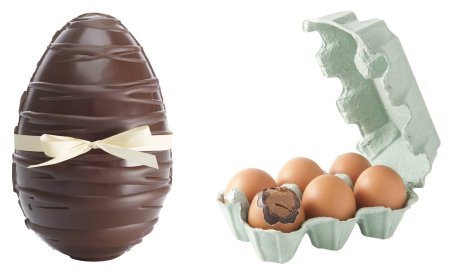
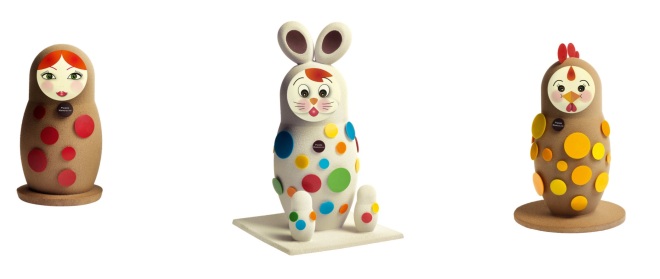
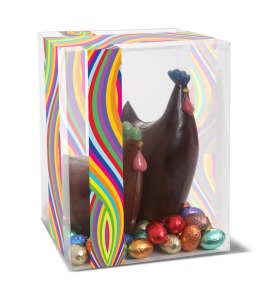
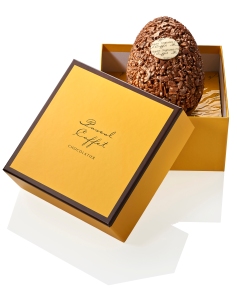
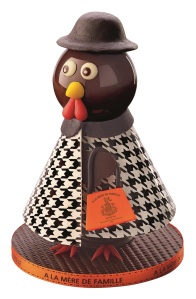
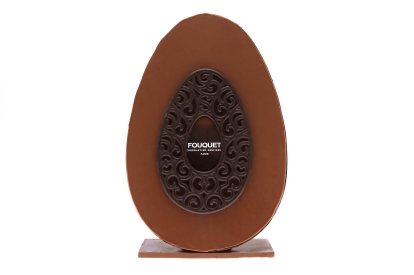
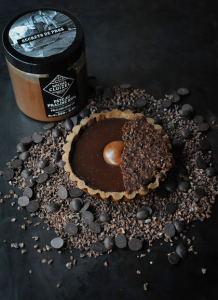
As a diamond shining in a store window or the One Ring of ages past, chocolate works its power on our palates in ways we can hardly resist. The Chocolate Week was the perfect moment for the finest British chocolatiers and European chocolate producers to present their wares without the slightest hint of guilt.

Paul A Young Collage

According to Paul, Paul A. Young “You should never feel guilty about chocolate. Feel guilty about the take away and the junk food! Never about chocolate as long as you choose the right quality. Chocolate makes you feel alive and smile. Don’t be shy about it.”

Trish collage

Trish Deseine defines chocolate as an “escape and pleasure! A little guilt is a good thing from time to time, but not when served with food.

Divine collage

Eating chocolate is a bit of an occasion and it’s proper treat. It’s like a comforting hug or kiss,” confides Rosanna from Divine Chocolate. “I don’t see the guilt factor when you have just a little of what you fancy now and again! Chocolate has a great power to bring out the best in people.”

Artisan du Chocolat

For Elise, Artisan du Chocolat, chocolate is “pleasure, a delicious taste, work, but first of all a connection to pleasure. There’s no reason to feel guilty about enjoying good chocolate that contains no additives and very low levels of sugar.”

Rococo collage

The visual pleasure and the taste are almost as important as knowing where the ingredients come from.” explains James, from Rococo. “It is very important to create a connection with the people who work hard to get the best out of the cocoa bean. As long as you pick the right ingredient to make the best chocolate, there is no reason to feel guilty of enjoying a delicious piece of it.”

And what do our passionates about food think about it?

drinkandeatRelief!
meemalee “’Chocolate’ means a cute autistic girl with amazing martial art skills
bellalimento
LOVE! Yes, Chocolate, the kind that makes you bite your lip and say mmmmh is LOVE!
aforkful
Pure sensory indulgence
chocolatetours: “Joy

Older Posts »